
Novelties and products
We grant you an opportunity off additional product placement via the Exhibition website.
We help you to focus more of visitors’ attention on your products that enter the market, the advantages of new technologies and innovations!
Khimia 2026 novelties
Application
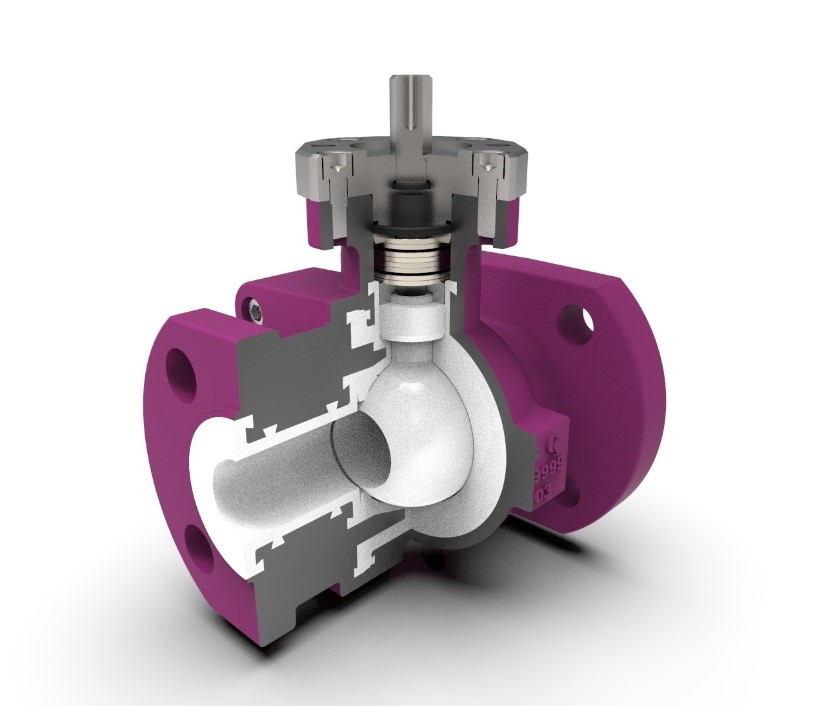
Shut-off of chemically aggressive liquids or gases, including those containing solids.
Material
- Casing material: High-strength cast iron 5.3103
- Body lining: PFA
- Ball material: stainless steel 1.4408/1.4404
- Ball lining: PFA
- Dimensions: DN 15-200 | ½"-8"
- Flange bore: EN 1092-1 PN10-16 | ASME Class 150 | JIS 10K
- Maximum working pressure: 16 bar.
- Media temperature: -20 °C ... 200 °C
- Pressure class: class A (complete tightness in both directions)
- Enclosure painting for media containing chemically aggressive aerosols
Accessories
Available with manual drive, pneumatic drive and electric drive in various configurations.
The main advantages
- Collapsible design
- Easy to dismantle and flush
- Self-sealing gland assembly
Application
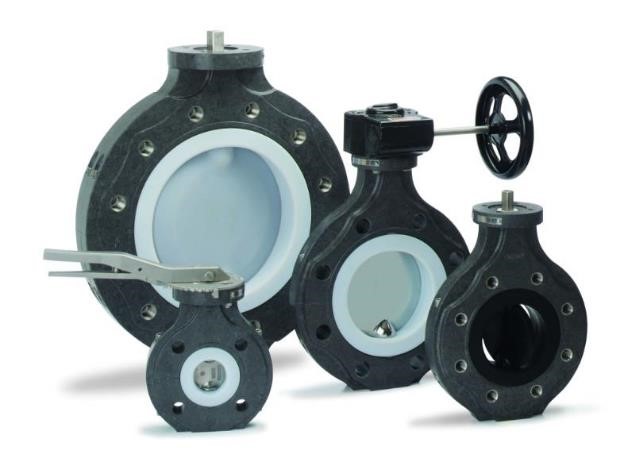
Closing and regulating the flow of chemically aggressive liquids or gases, including those containing solids.
Material
- Case material: VE-CF
- VE = Vinylester
- C = 10% graphite
- F = 10% glass fibre
- Body lining: PTFE
- Disc lining: PFA
Product specifications
- Dimensions: DN50 to 300
- Body type: threaded eyelet body or intermediate flange body
- Fittings: PN10-16, ANSI CL150
- Maximum working pressure: 10 bar.
- Media temperature: -20 °C to +130 °C
- Leaktightness class: class A (complete tightness in both directions)
Accessories
Can be manually operated, pneumatically operated and electrically operated with various options.
Main advantages
- Corrosion-free body
- Costs less than valves with stainless steel body
- Same pressure class as chemical valves with cast iron or steel body
- UV-stabilised casing
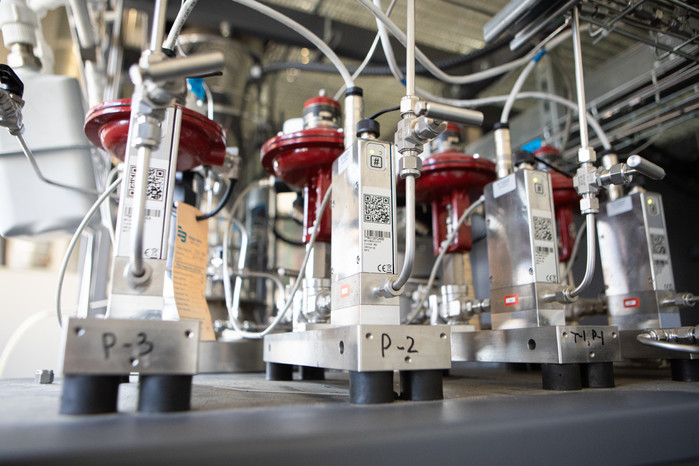
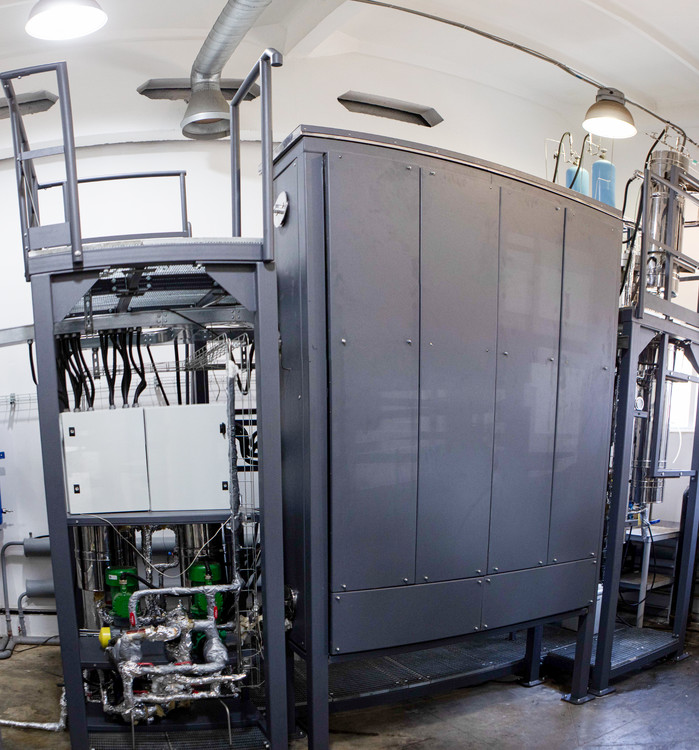
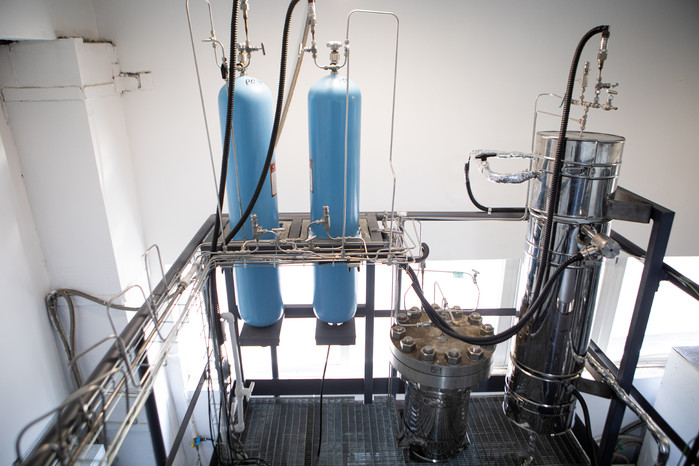
Tar Hydroprocessing Technology
Catalysts for the hydroprocessing of heavy raw materials (tar, fuel oil) have been developed. The process is carried out under a hydrogen pressure of up to 180 atm and temperature of 380–450°C due to the reactions of hydrocracking, hydrodemetallization, hydrodesulfurization and hydrodenitrogenation to obtain marine fuel.
The developed catalysts are proposed for use at oil refineries in the processes of hydrofining of heavy residual feedstock for the production of marine fuels or feedstock from other secondary processes (FCC, RFCC, HCU, DCU). The yield of marine fuel is 900 kg from 1 ton of tar. The final sulfur content is up to 0.49%. The deadline for the demonstration of a working production line: from November 2021.
Productivity: 8 tons per year.
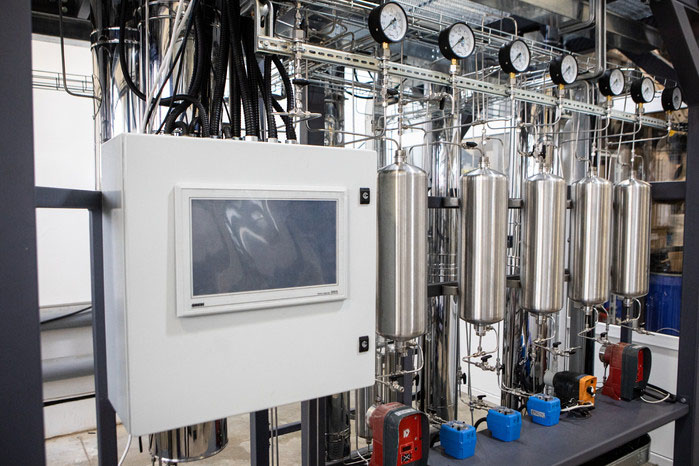
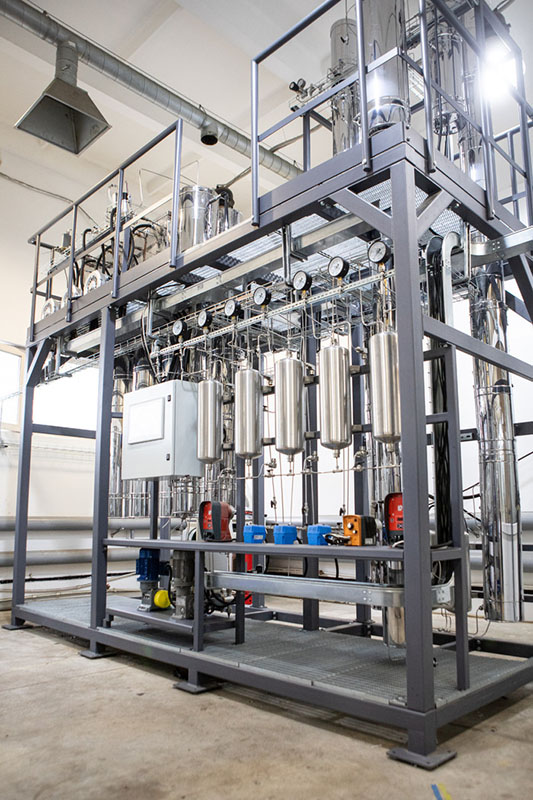
Methyl ethyl ketone (MEK) production technology by oxidation of butane-butylene fraction with nitrous oxide.
A technology for producing MEK using the method of gas-phase oxidation of butane-butylene fraction with nitrous oxide has been developed. Separation of the obtained MEK from by-products with close boiling points has been implemented. Process parameters: pressure 30–40 bar, temperature 350–400°C.
The pilot plant is designed for a flow rate of 1.5 kg/hour according to BBF. The unit is capable of operating on any liquefied butylene-containing feedstock (with a butylene content of 30% by weight). The pilot plant is equipped with a SCADA system, which allows to control the main technological parameters from the operator's console. Productivity: 100,000 tons per year.
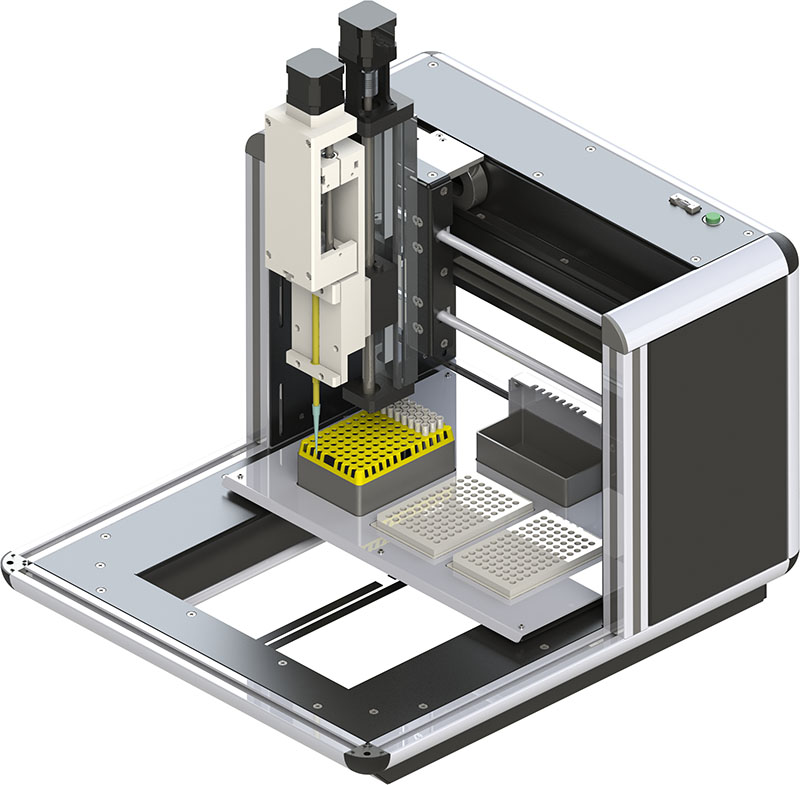
The equipment allows us to automate routine pipetting operations and reduce the influence of human error on the result. We focus on ease of operation, service availability and attractive prices.
Benefits:
- Significant acceleration of routine laboratory operations;
- Ability to modify systems to meet customer needs and processes;
- Ease of operation and maintenance;
- Local production;
- Quick availability of service;
- Attractive price;
- Compatibility with standard laboratory pipettes from any manufacturer;
- Compatibility with any micro-injector syringe;
- Flexible set-up and easy programming.
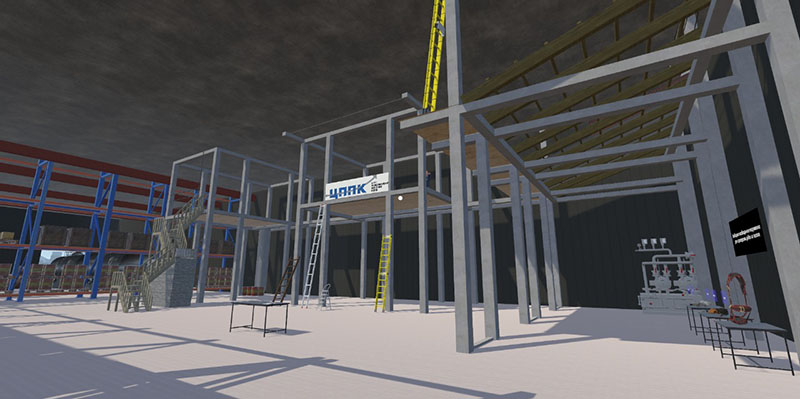
A virtual reality simulator for teaching and practicing skills of the use of safe methods and techniques for work performance at height for employees allowed to work as part of a team or under the direct supervision of an employee appointed by the employer’s order.
The simulator consists of the following modules:
- 1. Teaching the user to work with the simulator;
- 2. Training of practical skills when performing the work at height according to the job order (briefing, job order, scheduled maintenance task card, selection of PPD, selection of equipment, work performance and results evaluation).
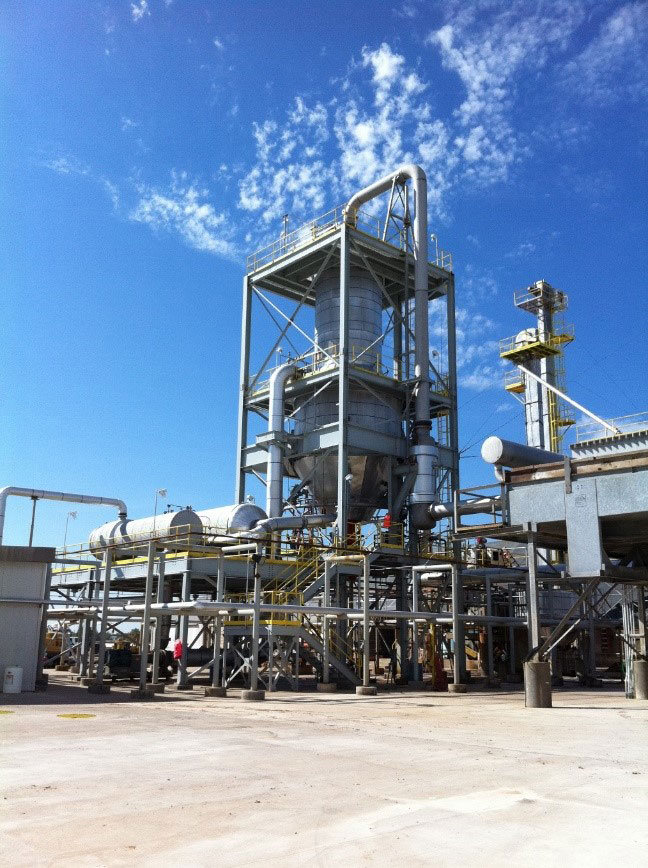
Specific features
Ammonium sulphate crystallization using state-of-the-art DTB molds (including circulation pipe and baffle) under strictly controlled conditions to obtain large-size crystals with close size distribution.
Raw materials
- Waste solutions such as those obtained as a result of acrylonitrile, caprolactam and methyl methacrylate production
- Mixture of the above mentioned waste solutions
- Directly from liquid ammonia and sulphuric acid
Process characteristics
- Production of large-size crystals with close size distribution
- Decomposition of fine fraction in the external heat exchanger
- Minimum crystals abrasion inside the circulating plant
- Selective crystals growing using chlorhydric stems
- Fluidized bed dehumidification/cooling to precisely identify the moisture content in the product
- Provision for finished products size range due to application of the double screen
Plant parameters
- Line production capacity: up to 300 metric tons/24 hours
- Several lines aimed to achieve larger production capacity and flexibility
- Evaporation: multiple or vapour recompression in multi-stage fans
- Special feeder system that ensures constant rate of products feeding into the centrifugal unit
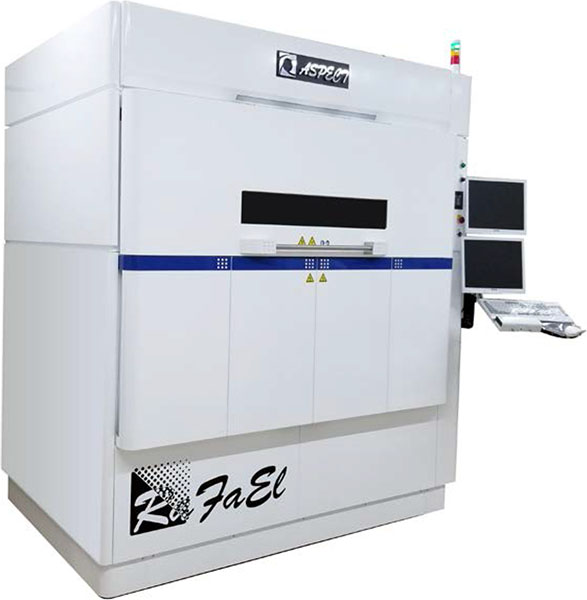
Additive Manufacturing is the construction of products by stepwise adding of material to the base in the form of a flat platform or axial template. The term “additivity” (from Latin additivus – added) incorporates the basic principle of this process. Such method of manufacturing is also referred to as “growing” due to layer-upon-layer creation of the product. The Japanese company Aspect has been involved in developing 3D technology of Power Bed Fusion since 1986. Currently, Power Bed Fusion occupies more than half of the global equipment and up to 40% of additive materials market.
Rafael series 3D printers are high-quality laser systems for powder layer fusion developed to meet the prototyping requirements in production. The advantage of 3D printers is its capability to operate using CAD drawings in the electronic format, to transmit and receive computer models through the network directly to the production site, to reduce materials consumption and the number of components for the pilot part, to save raw materials and minimize wastes as compared to standard pilot production.
Various properties of materials, from standard to super-engineering polymers, are available in this open parameters system. The series is characterized by increased production capacity and stability that makes it possible to manufacture more dimensionally precise polymer products. High-temperature materials such as PP3 and PPA (fluorine plastic) can be used in Rafael HT series.
Applied materials: engineering super-plastics, fiber glass, NYLON 6-12, polybutylene terephthalate, polyphenylene sulfide, carbon fiber fluorine plastic-50, amorphous polymers, materials for extrusion, crystalline polymers, etc.
Specific features of the 2021 Rafael series:
- Quality and accuracy
- Closed loop heater control and thermography to optimize temperature distribution along the product layer surface.
- Three independent IR-sensors.
- Configurable digital scanning system.
- Adjustable digital controller of galvanometer.
- Scanning and programmable dynamic control of 3D-focus.
- Patented system of the cooling module in inert environment (production capacity increase up to 35%).
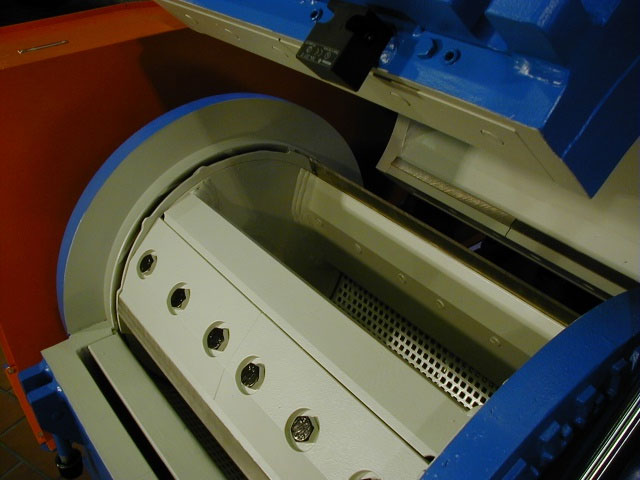
Super-precise grinding machine ORIGINAL PALLMANN of PS-C type allows grinding cellulose both in sheets and coils and in bulk. Cellulose sub-sieve powders are used as fillers in plastic and rubber-processing industries and in molding compounds, filtering additives or as the base material for production of cellulose esters.
Advantages
- Production of sub-sieve powders with smooth surface and high flow rate
- Homogenous finished product with high bulk density
- Excellent powders flow rate
- Cold processing of materials, optimum cooling air supply due to special open-type design of rotor
- Fast and thorough cleaning due to easy access to the grinding chamber
- Easy replacement of sieves and grinding blades due to special design of the structure
- High economic efficiency and production capacity
Operating principle
Coils, sheets and strips are transported to the grinding chamber by means of retracting devices with rolls. Pre-cut material is charged through the top tray. Grinding to the required size is carried out between stator and rotor blades inside the grinder housing. Final fineness is determined by rotor rotation rate and type of integrated sieve.
High-speed models with special rotors and sieves are used for continuous grinding of cellulose sheets and coils.
Finished ground product is discharged downwards directly from the grinding chamber due to the pneumatic system. In addition, material can be subsequently charged into the cyclone and hopper for further processing.
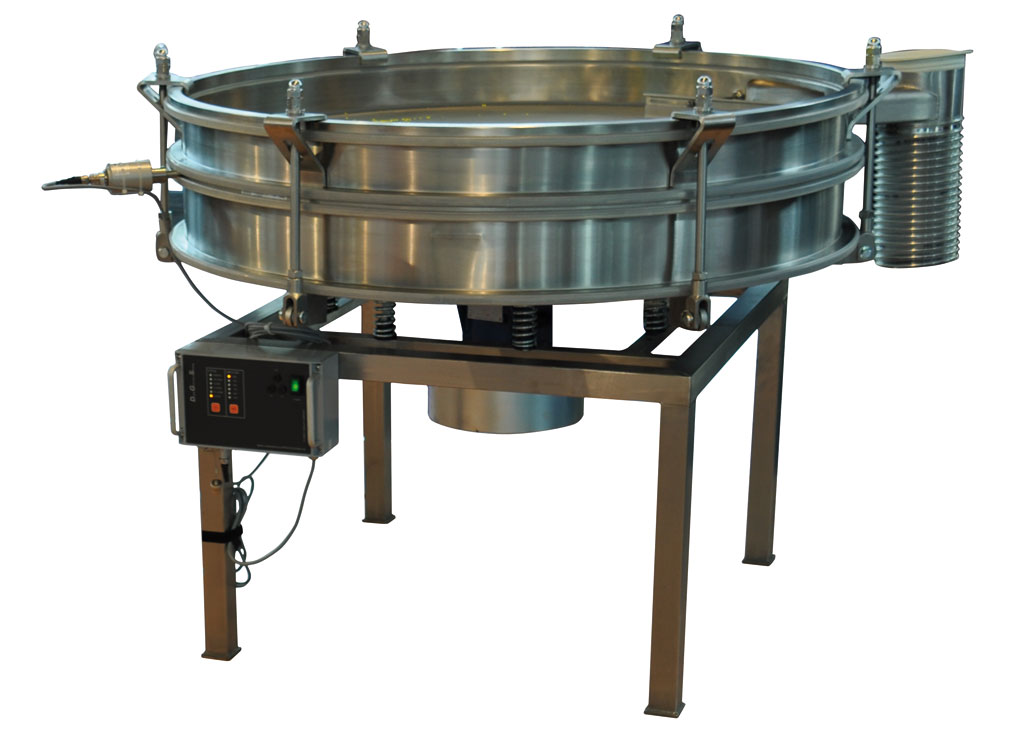
This ultrasonic system provides for significantly more effective screening especially in cases of small size meshes. Production capacity increases essentially within the equivalent area. Moreover, it also prevents difficult-to-sieve products from clogging and sticking together. This system is in compliance with hygienic / sanitary requirements established for sieving in food and pharmaceutical industry.
Specification
- Suitable for sieves with wire mesh diameter of up to 0.4 mm
- PPS/SPS/PCL connection for remote control and warnings about errors
- ATEX Certificate (internally – area 20, externally – area 22)
- The memory covers up to five applications, combinations are possible, for example, automatic switching between the application and cleaning mode
- Hardware-based frequency analysis using user`s software to control the screening mechanism
- System for monitoring readings of cables, converter functions, temperature and production capacity
- Plug & Play processes
- Optional: remote setting of process parameters and control of the system using user`s software
Basic advantages:
- Generator`s setting and adjustment is not required in 99% of cases
- Increase in production capacity by material
- Transducer and cable are located outside the machine that is why there is no risk of product contamination
- It is in compliance with the ATEX requirements
- There is no generating of ‘hot zones’ due to continuous low temperature, which prevents a product from burning-in or attachment to sound elements
- It is possible to perform refitting of any type of the screening machine, combination with a different protection system against contamination such as ball cleaning system
- Due to easy replacement procedure it is suitable for screens with double sieves on the frame
- Increased service life of the sieve cloth during adjustment for ultrasonic performance.
- Reasonable price
- Only one ultrasonic generator is required to activate the transducers (up to 4 pcs.)
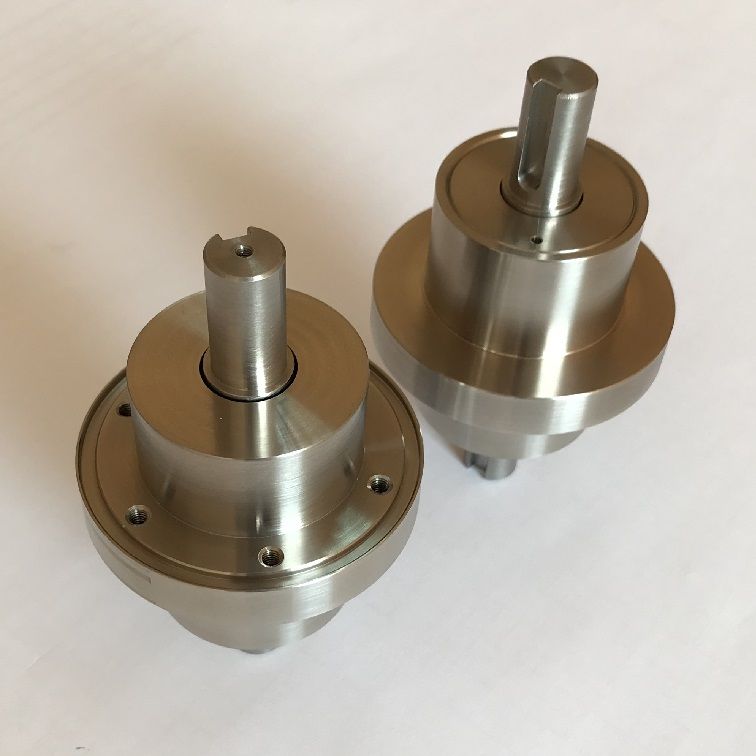
Designed for application in process equipment of the electronic and chemical industries. Designed to transmit rotation into vacuum reactors (chambers) and reactors with overpressure of up to 1.1 atm for non-aggressive gases. Shaft speed of up to 1500 rpm, helium incoming flow of no more than 10-12 m3Pa/s, residual pressure inside reactor of at least 10-6 Pa (over pressure of up to 1.1 atm), operating temperature of up to 80 °C, the housing and the shaft are manufactured from stainless steel, way of drive/load fastening to the rotating feedthrough shaft is by keyway. Service life of magnetic fluid sealed rotating feedthrough ТВРМ.305319.005 is 10 years.
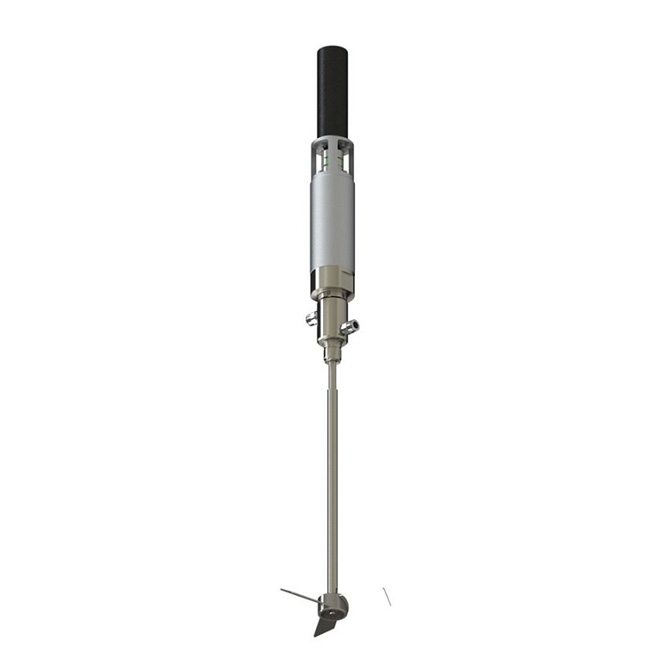
Designed for mechanical agitation of heavy hydrocarbons mixtures inside pressurized reactors by means of blades (impellers) rotating round the shaft. Blades are rotated by brushless electric motor through the sealed magnetic clutch. Product properties: mass 4.5 kg; Product dimensions (L×W×H) 851×61×83 mm; Type – vertical, into reactor head; Maximum torque, not less than 100 N*cm; Maximum overpressure 1 MPa; Reactor maximum temperature 300°C; Reactor medium – fuel oil; oil tar; Type of product/reactor seal – end gasket, thread M24x1.5; Length of rod projected part is 380 mm; Rod diameter within reactor head area is 10 mm; type of product cooling – by water, through push-in fitting 6510 10 OD Ø10 mm plastic tube; Type of electric motor – brushless, with adjustable rotation of up to 222 rpm; Motor control center – control unit BLSD-20Modbus including RS-485, DIN-rail version; Power supply voltage, 24 V DC; Maximum output 70 W; International Protection Rating IP54 GOST IEC 60034-5; Product application service – non-aggressive, non-explosive including conductive dust content of up to 10 mg/m3; Climatic category, У3.1 GOST 15150; Dismountable three-blade impeller, type 01 as per АТК 24.201.17-90, OD Ø 140 mm. Agitators can also be of ТВРМ.303581.001-001 version for operation under reactor maximum temperature of 450°C.
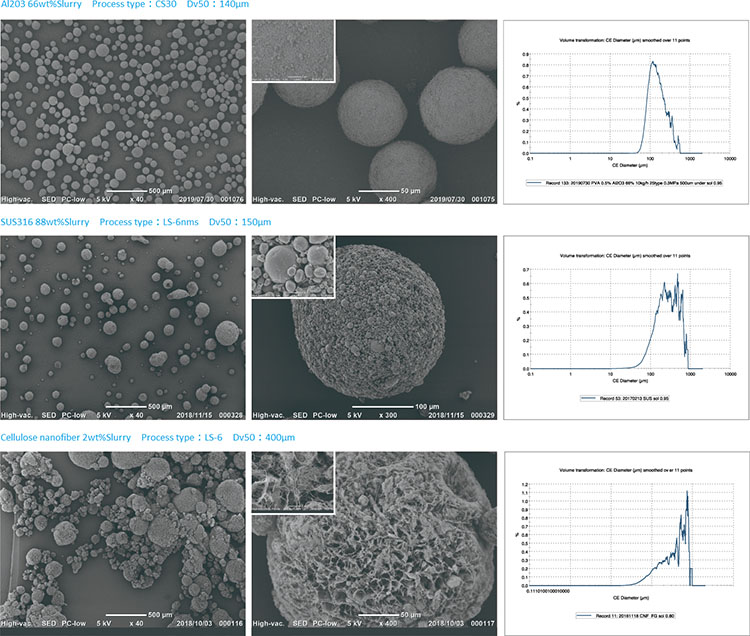
Cryogenic (sublimational) granulation is an industrial process used to produce spherical granules with excellent flow properties by spraying liquid material under ultra-low temperatures. The sprayed material is instantly frozen and the dried granules are formed as a result of the freeze-drying process. The granules produced are spherical and have excellent flow properties and are uniform in volume.
Unlike spray drying, the granules are not subject to shrinkage and no material re-distribution occurs inside the granule. It prevents air traps occurrence and makes it possible to manufacture highly-dispersed, low-density and uniform spherical granules. The range of granules sizes (PSD) is much wider (10–700 μm) as compared to that of spray drying. It makes it possible to achieve the tap density that is equal to or higher than that of the spray drying. Moreover, unlike processes of high temperature drying by hot air, it is possible to minimize oxidation of raw materials during production.
Application:
- frit and composite metals;
- metal casting and powder fillers;
- synthesis of new materials;
- redispersible processing of nano-powder and carbon nanotubes (CNT);
- production of carriers and catalysts;
- production of LED materials;
- production of materials for thermal spraying;
- pharmacy services and biomaterials.
Basic advantages:
- granules size 10–700 μm;
- spherical shape and increased powder granules flow properties;
- minimum deformation;
- absence of bridges and redistribution of particles inside the granule;
- soft granule with low density;
- no air traps and uniformity in volume;
- lower oxidation as compared to drying under high temperatures;
- control of the density of the granules by regulating the concentration of the solid component;
- minimum material losses, high output;
- remote possibility of final product contamination;
- possibility to work with both small and large batches, from 50–100 ml and more;
- easy equipment cleaning.
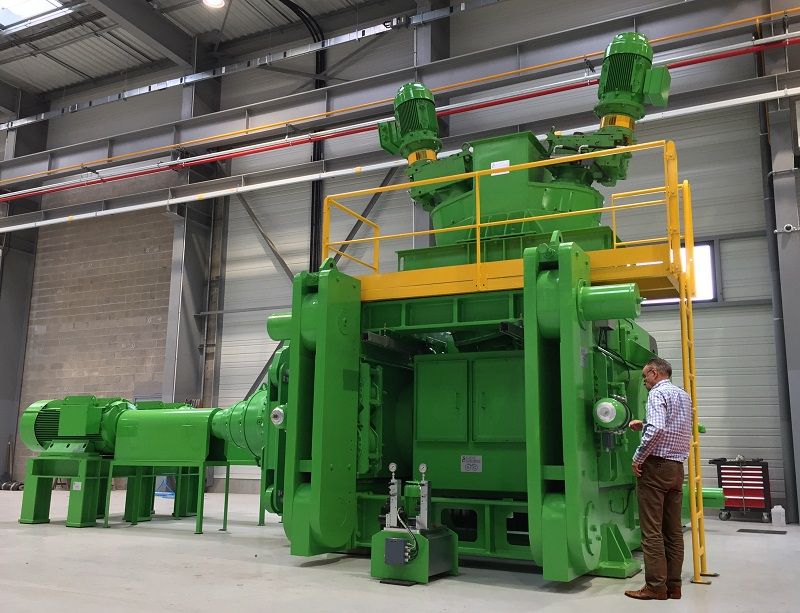
Dry compacted granulation is the compaction of fine bulk materials between two profiled rollers rotating towards each other.
When engaged between rolls surfaces, the material gets pressed into a solid slab with the width to be determined by the rolls effective length. The produced slab is an intermediate product that shall be subject to two stages of crushing, screening and refining to become a commercial granulate.
Qualitative properties of granules manufactured based on SAHUT-CONREUR process shall meet international standards and GOST of the Russian Federation.
Advantages of this method:
Customization of fertilizers recipes: a wide range of raw materials is used, fertilizers are manufactured in accordance with the needs of the end user.
Simple process: the unit is quick and easy to maintain, resulting in less downtime.
Low costs of products granulation: our equipment is energy efficient and does not use water in the process that reduces granules production costs for the manufacturer.
The range of mineral fertilizers produced by compaction and granulation method is quite wide and shall include:
- potassium chloride
- potassium sulfate
- ammonium sulfate
- multicomponent fertilizers NPK + and etc.